Calming Box
A hands-on mental wellness toolkit designed to help people experiencing anxiety, sensory overload, or emotional overwhelm through accessible, screen-free calming techniques.
The Calming Box combines evidence-based calming techniques with universal accessibility features to serve users across different abilities, including those with visual impairments, neurodiversity, or sensory sensitivities.
Project Overview
Project Aim
The Calming Box aims to provide quick and practical stress relief through physical tools that people can use during moments of anxiety or feeling overwhelmed. By providing hands-on calming methods instead of digital solutions, the box addresses the need for screen-free grounding techniques, particularly for people experiencing digital fatigue or without access to technology.
Key Objectives
- Deliver clear, user-friendly calming techniques accessible to all individuals
- Include universal accessibility features: Braille labels, QR audio codes, and intuitive visual icons
- Facilitate immediate grounding and self-regulation during moments of anxiety or overwhelm
- Keep the design simple, affordable, and easy to use/assemble
Critical Making Approach
The Calming Box incorporates mental wellness support through multiple sensory techniques, including calming action cards, fidget toys, a small lamp, and journaling materials. During the ideation process, we thought deeply about how values can be conveyed through material, rather than merely treating the box as a tool for stress relief.
Design Philosophy
By incorporating Braille, QR codes for audio, visual icons and pictures, and gentle lighting, we reflected on how people with special needs are often excluded from everyday objects and how design decisions can break down those barriers. Through the box, we considered who might be left out and how our prototype can serve a range of users with various needs.
Our concept demonstrates critical making by encouraging critical reflection through physical materials, exploring how inclusive design principles can be embedded directly into everyday wellness tools.
Addressing Mental Wellness
The Calming Box addresses the social concern of mental well-being in a way that can be used by anyone at almost any age. Everyone experiences moments of frustration, overwhelm, or overstimulation, whether at school, work, or in everyday life.
Who Benefits
The calming box’s main focus is on helping special needs children and adults who are more prone to emotional outbursts. The box provides tools to help manage emotions through fidget toys with various textures (soft fleece, squishy foam, smooth metal), calming action cards, and journaling materials.
Communication Support
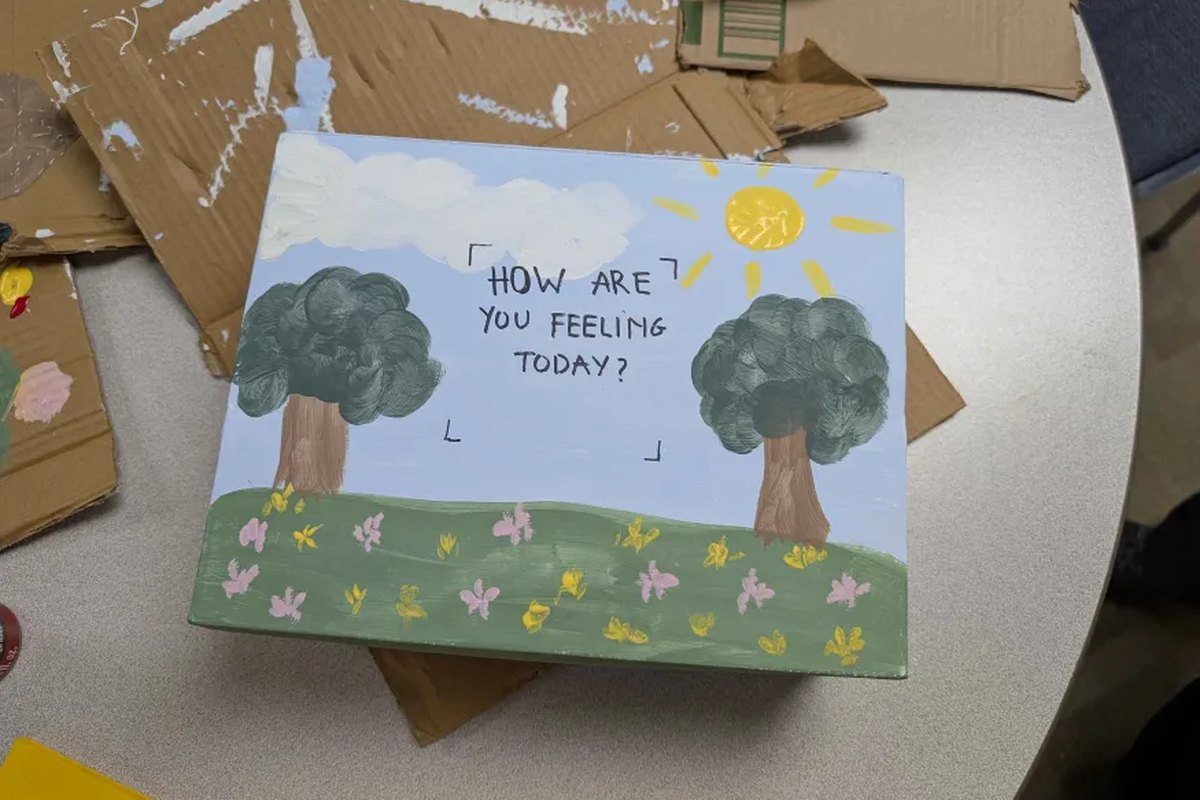
Items like the notepad and marker allow people who might have trouble communicating or identifying their emotions to draw and write what they are feeling. The outside of the box includes a spot for sticky notes where users can express how they’re feeling to others.
Universal Accessibility Features
Braille Labels
Braille labels and text on calming action cards for visually impaired users
Audio QR Codes
QR code that plays calming sounds or reads text from calming action cards for those who struggle with reading
Clear Visual Labels
Clear labels and icons on the box for easy and intuitive use by anyone, including those with special needs
Box Contents
The Calming Box includes a carefully curated set of tools designed to address different sensory needs and calming techniques:
Calming Action Cards
Guided breathing exercises and grounding techniques with Braille labels
Fidget Toys
Various textures including soft fleece, squishy foam, and smooth metal for sensory stimulation
Small Lamp
Gentle lighting using Arduino board and Elegoo Kit for creating a calming environment
Journaling Materials
Notepad and markers for expressing emotions through drawing and writing
Instruction Sheet
Simple and encouraging guidance on the interior lid to avoid confusion or extra stress
Expression Zone
Space on the box exterior for sticky notes to communicate feelings to others
How We Built It
The Calming Box was created from affordable and accessible materials, emphasizing the importance of making mental wellness support available to everyone regardless of economic circumstances.
- Gather Materials. Cardboard box; additional cardboard for partitions; box cutters; hot glue gun; calming tools (fidget toys, etc.); Arduino Board and Elegoo Kit; notepad and markers; instruction paper
- Create the Box Structure. Cut extra cardboard into partitions for organizing different tools; glue in the partitions to create separate sections; paint the box (aesthetic choice, not required)
- Add Calming Tools. Add instruction paper to interior lid; install Arduino Board and Elegoo Kit for gentle lighting; place calming tools into each section; add notepad and markers for emotional expression
Project Impact & Learnings
Making Mental Wellness Accessible
The Calming Box demonstrates how thoughtful, inclusive design can make mental wellness support available to people across different abilities and economic circumstances. By combining physical making with critical reflection on accessibility, we created a tool that serves diverse needs while remaining affordable and easy to reproduce.
Key Takeaways
This project reinforced the importance of designing for inclusion from the start, not as an afterthought. By considering users with visual impairments, neurodiversity, and sensory sensitivities throughout the design process, we created a more effective tool for everyone. The hands-on making process also revealed how material choices and physical design can embody values of accessibility and care.